
What Is a MERV Rating? A Complete Guide

When it comes to indoor air quality, not all air filters are created equal. Whether you’re managing the air system for a hospital, school, cleanroom, or even your own home, understanding the capabilities of your filtration system is essential.
One of the most important indicators of filter performance is the MERV rating. But what exactly is a MERV rating, and how do you choose the right one for your application? This guide will walk you through everything you need to know.
What Does MERV Stand For?
MERV stands for Minimum Efficiency Reporting Value. It is a standardized rating system developed by ASHRAE (the American Society of Heating, Refrigerating, and Air-Conditioning Engineers) to assess the effectiveness of air filters at trapping particles of varying sizes.
Specifically, the MERV rating is defined in ASHRAE Standard 52.2, which outlines the procedures for testing a filter’s efficiency in capturing airborne particles between 0.3 and 10 microns in size.
The MERV scale ranges from 1 to 16. A higher MERV rating indicates a higher level of filtration efficiency, meaning the filter can capture smaller particles more effectively.
However, higher MERV ratings also come with increased resistance to airflow, which can impact HVAC system performance if not properly accounted for.
[blog-post-ad-general]
How the MERV Rating System Works
The MERV rating system is based on particle capture efficiency across three size ranges:
- 0.3 to 1.0 microns (E1)
- 1.0 to 3.0 microns (E2)
- 3.0 to 10.0 microns (E3)
Filters are tested under standardized conditions to determine their performance in each category.
Each of these size ranges is evaluated independently, and the filter is assigned a score for each one. However, the MERV rating itself is not an average or a composite of these scores, it is based on the filter’s minimum efficiency observed during testing. This conservative approach is intentional and crucial.
By basing the rating on the lowest efficiency observed, the system ensures that the filter will consistently perform at or above that level in real-world conditions. Having a rating that accounts for these realities helps ensure consistent air quality over time.
Once the data from the particle size tests is collected, it is mapped onto a standardized scale from 1 to 16. This scale translates the filter’s tested ability to capture different sizes of airborne particles into an easy-to-understand number.
Lower numbers (1–4) indicate basic filtration that primarily protects HVAC equipment, while higher numbers (13–16) reflect high-efficiency filters capable of capturing bacteria, smoke, and microscopic allergens.
The scale is intentionally structured so that users can easily compare different filters and make informed choices based on their specific indoor air quality needs.
The MERV Scale Visualized
Here is a breakdown of what different MERV ratings typically capture, presented as a visual chart for quick and easy reference.
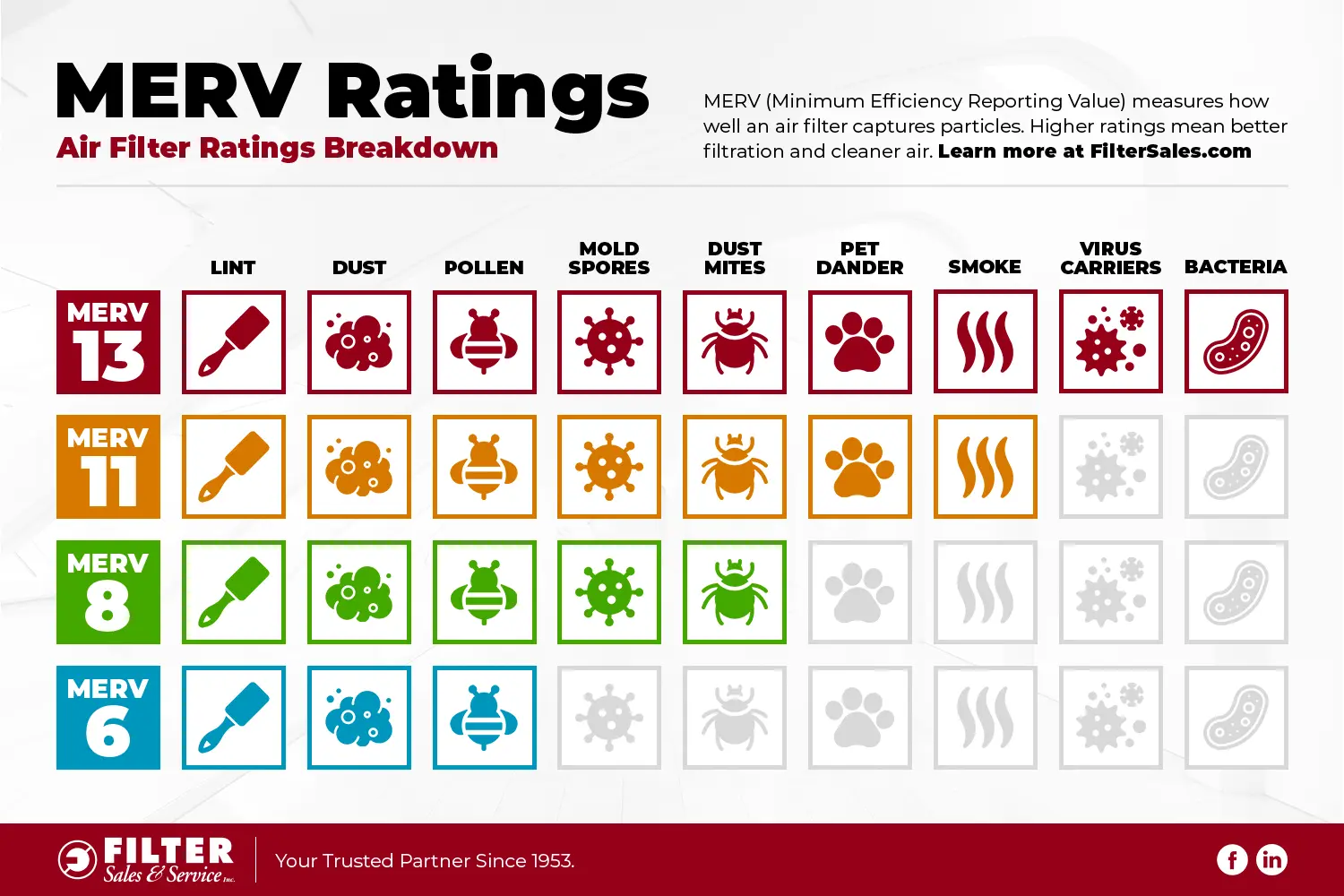
We’ve designed this graphic to be a helpful resource as you evaluate your filtration needs, so you are encouraged to download the image and keep it on hand when discussing air quality goals with your team or HVAC professionals.
Now that you’ve seen how each rating functions visually, let’s dive deeper into how to interpret those numbers and what they really mean for your filtration strategy.
MERV 1-4: Basic Protection
The MERV 1-4 range provides only the most basic level of filtration, designed primarily to protect HVAC equipment from large debris rather than to meaningfully improve indoor air quality. While they can trap larger particles such as dust, pollen, and carpet fibers, they are largely ineffective against smaller allergens and airborne contaminants that impact health.
Although these filters are inexpensive and place little strain on airflow, their limited filtration performance makes them unsuitable for most modern indoor environments.
In general, anyone concerned about air quality should consider starting with at least a MERV 5–8 filter for better balance between system efficiency and healthier indoor air.
MERV 5-8: Moderate Protection
Filters in the MERV 5-8 range offer moderate protection by capturing a wider range of particles, including mold spores, pet dander, and some larger airborne chemicals.
These filters are often used in commercial buildings and higher-end residential HVAC systems, as they provide a noticeable improvement in indoor air quality without causing excessive strain on the system.
The primary benefit of these filters is their ability to improve overall air quality in spaces with moderate pollution levels, but the tradeoff is that they still may not capture smaller allergens and pathogens. They also require slightly more frequent maintenance to ensure continued efficiency.
MERV 9-12: Enhanced Protection
MERV 9-12 filters offer an enhanced level of filtration, suitable for commercial spaces, offices, schools, and other environments where improved air quality is important.

They effectively capture smaller particles such as lead dust, auto emissions, and fine debris, providing a higher degree of indoor air cleanliness without heavily restricting airflow.
This range strikes a strong balance between filtration performance and system efficiency. While they introduce slightly more resistance than lower-rated filters, they are a smart choice for facilities where occupant health, comfort, and productivity are priorities.
MERV 13-16: High-Efficiency Filtration
The MERV 13-16 range represents the highest level of air filtration efficiency within the MERV rating system, capable of capturing bacteria, tobacco smoke, and even sneeze particles. These filters are commonly used in sensitive environments where superior air quality is non-negotiable.
The main advantage of these filters is their ability to capture nearly all airborne particles, including pathogens and allergens, but they come with the downside of significantly higher resistance to airflow. This can require system upgrades to accommodate the increased pressure drop, making them best suited for facilities with specialized HVAC systems designed to handle such filters.
Despite this, their ability to provide top-tier air quality makes them essential for certain applications.
Beyond MERV: HEPA and ULPA Filters
While MERV ratings cover a wide range of filters used in commercial and industrial buildings, they do not include every type of filtration technology. For environments requiring even higher levels of air purity, such as hospitals, pharmaceutical production, and specialized manufacturing, HEPA and ULPA filters are essential.

HEPA filters (High-Efficiency Particulate Air) are designed to capture at least 99.97% of airborne particles as small as 0.3 microns. They are commonly used in healthcare settings, cleanrooms, and laboratories where maintaining a sterile environment is critical.
ULPA filters (Ultra-Low Penetration Air) go even further, trapping at least 99.999% of particles down to 0.12 microns. These filters are often found in the most demanding cleanroom environments, such as semiconductor manufacturing and advanced pharmaceutical facilities.
Because MERV-rated filters are not designed to meet these extreme performance standards, HEPA and ULPA filters are specified when the highest levels of particulate control are required to protect products, processes, and people.
Understanding MERV-A Ratings
In some cases, air filters are manufactured with an electrostatic charge that temporarily enhances their ability to capture particles. This electrostatic charge essentially acts like a magnet, pulling in particles more efficiently and raising the filter’s MERV rating.
While this can boost the filter’s performance initially, the charge weakens as the filter collects dirt and particles. As the charge fades, the filter’s particle capture efficiency decreases, and the MERV rating can drop.
For example, a MERV-13 filter with an electrostatic charge might eventually perform more like a MERV-8 filter as it loads up with dirt.
To account for this, ASHRAE offers a testing method that measures a filter’s performance without the electrostatic charge. The results of this test are referred to as MERV-A ratings.
While “A” does not actually stand for “actual,” thinking of it that way can be a helpful way to remember that MERV-A ratings reflect a filter’s true efficiency, which remains consistent over time, even after the electrostatic charge fades.
MERV-A ratings give a more accurate picture of how a filter will perform in real-world conditions, where the charge might dissipate with use. It’s an important consideration when choosing a filter for long-term reliability, as filters with MERV-A ratings will maintain their efficiency more consistently than those with electrostatic enhancement.
Choosing the Right MERV Rating for Your Application
When selecting a MERV-rated filter, it is important to consider the following factors:
Application Requirements
Selecting the right MERV rating is essential for achieving good indoor air quality, protecting occupants, and ensuring HVAC system efficiency. Different environments require different levels of filtration:
- Commercial Buildings usually don’t need high efficiency filters, but they do need options that can handle large amounts of airborne particles. High-capacity pleated filters or bag filters are a smart choice, offering more dust-holding capacity without restricting airflow and helping maintain cleaner, healthier indoor spaces.
- Industrial Settings usually face bigger challenges when it comes to air quality. Between heavy machinery, production processes, and airborne contaminants, stronger filtration is key to protecting both worker health and valuable equipment from long-term damage.
- Educational Institutions bring large groups of people together in relatively tight spaces, which means more germs, allergens, and dust in the air. Better filtration helps create healthier classrooms, improving both student well-being and attendance.
- Homes may not have the same heavy demands as a factory or office building, but clean air still matters. Filters that can handle everyday pollutants like dust, pet dander, and pollen make a big difference, especially for families with pets, allergies, or respiratory issues.
Every environment has different air quality demands, and choosing the appropriate filtration level ensures you meet those needs without overburdening your HVAC system or compromising indoor conditions.
HVAC System Compatibility
Higher MERV ratings mean better filtration, but they also create more resistance to airflow. And not every HVAC system is built to handle the pressure drop that comes with a higher-efficiency filter.
If a filter is too restrictive, it can choke off the airflow your system needs to operate efficiently. This can lead to increased energy use, uneven heating or cooling, and even long-term damage to your equipment.

Some high-end commercial air handling units are specifically built to manage this challenge. With more powerful fans and greater system capacity, they’re designed to maintain proper airflow even with high-efficiency filters in place.
But for most systems, especially older or lighter-duty models, it’s important to assess the impact of added resistance before making a change. Consult the system manual or talk with a qualified HVAC professional to make sure your equipment can handle the added resistance.
A filter upgrade should improve your air quality without sacrificing the health or efficiency of your system.
Indoor Air Quality Goals
When selecting a filter, it’s always important to consider your indoor air quality goals.
If you’re aiming to reduce allergens, bacteria, or fine dust particles, a higher MERV rating can be beneficial. Higher-rated filters are more effective at capturing smaller, more harmful particles, improving overall air cleanliness.
However, your specific needs should guide your decision. For example, if you’re only looking to reduce dust and pollen, a mid-range MERV filter may be sufficient.
Tailoring your choice to your goals ensures both efficiency and effectiveness.
Regulatory or Industry Standards
Certain industries have specific requirements for air filtration to ensure a safe and healthy environment. For example, LEED-certified buildings, which focus on sustainability and energy efficiency, often require MERV 13 filters to meet their indoor air quality standards.
Similarly, facilities in industries like pharmaceuticals, food processing, or manufacturing may need to meet strict air filtration standards to comply with regulations designed to protect health and safety.
It’s essential to research and verify any compliance requirements that apply to your facility. This ensures that your air filtration system not only meets industry guidelines but also supports the overall operational and safety goals of your business.
The Bottom Line: Finding the Right Balance
Choosing the right MERV rating is all about striking a balance between effective air filtration and maintaining the efficiency of your HVAC system. It’s not just about cleaner air, it’s about achieving that in a cost-effective and sustainable way.
Whether you’re looking to improve air quality in commercial spaces or provide high-level protection for sensitive environments, selecting the right filter is key. The ideal choice ensures both optimal air quality and long-term system performance, making it a smart investment for the health of your facility.
By understanding MERV ratings, you can make informed decisions that support both the well-being of your building’s occupants and the efficiency of your HVAC system. Whether you’re meeting regulatory standards, protecting equipment, or enhancing comfort, the right filter is essential.
If you’re unsure which MERV rating is best for your needs, our team of air quality experts is here to help. We’ll guide you through the process and recommend a filtration solution that offers both protection and performance.