
How Often to Change Air Filters: HVAC Air Filter Schedule

Contents
How often to change air filters is one of the most common HVAC questions, and the short answer is: it depends on the filter type.
A standard pleated filter in your home typically lasts 3 to 6 months. A high-capacity HEPA filter in a cleanroom might run 5 to 10 years before needing replacement.
That’s a massive range, and it’s exactly why generic advice like “change your filter every 30 days” falls short. The real answer requires understanding what type of filter you’re using, where it’s installed, and what it’s filtering out.
This guide covers air filter replacement schedules for both residential HVAC systems and commercial or industrial applications. We’ll walk through specific filter types, realistic lifespans based on real-world operating conditions, and the factors that shorten or extend filter life.
Air Filter Lifespan by Type
Before diving into the details, here’s what our technical team sees across thousands of filter applications:
Residential Filters:
- Fiberglass throwaway filters: 1-3 months
- Pleated filters (standard capacity): 3-6 months
- Pleated filters (high capacity): 6-9 months
Commercial and Industrial Filters:
- Bag filters: 12-18 months (1 year typical)
- V-Cell filters: 24-36 months
- HEPA (HVAC applications): 2-3 years
- HEPA (cleanroom applications): 5-10 years
- HEGA/Molecular filtration: 1-3 years depending on application
These ranges reflect typical operating conditions. Your specific environment, including dust levels, chemical exposure, runtime hours, and pre-filtration quality, can push you toward either end of the spectrum.
For Homeowners: When to Replace Your Filter
Most homeowners are working with one of two filter types: fiberglass throwaway filters or pleated filters. Here’s how to think about each.
Fiberglass Throwaway Filters

These are the inexpensive, typically blue or white filters you find at hardware stores. They provide basic filtration and minimal airflow resistance.
Replacement schedule: Every 1-3 months under normal conditions.
The 30-day replacement advice you’ll see elsewhere assumes heavy use or poor air quality. If you’re running your system moderately and don’t have significant dust or pet issues, these filters often last longer than a month.
Want to change your filter less often? Consider upgrading to a pleated filter, which lasts 3-6 months compared to 1-3 for fiberglass.
Pleated Filters

Pleated filters offer significantly better filtration than fiberglass. The zigzag fold pattern creates more surface area, which means more particle capture and longer intervals between changes.
Replacement schedule: 3-6 months for standard capacity.
Pleated filters typically have high-capacity versions available. These have more pleats packed into the frame which is about 1.5x more surface area than standard versions. The extra media holds more debris before airflow becomes restricted, extending the replacement schedule.
Replacement schedule: 6-9 months for high capacity.
Factors That Shorten Filter Life at Home
Your air filter replacement schedule isn’t fixed. Several variables can cut filter life significantly:
- Pets: Dander and hair load filters faster. Multiple pets or heavy shedders may require monthly checks.
- Allergies or respiratory conditions: Higher MERV ratings catch smaller particles but fill up faster as a result.
- Smoking indoors: Fine tobacco particulates clog filters rapidly.
- Construction or renovation: Drywall dust, sawdust, and debris can overwhelm a filter in days.
- Poor outdoor air quality: Wildfire smoke, smog, or proximity to construction sites increases particulate load.
- High system runtime: Homes in extreme climates, whether hot and humid or bitterly cold, run HVAC systems more hours per day, cycling more air through the filter.
Here’s the best way to think about it: the manufacturer’s lifespan estimate assumes average conditions. If your conditions are above average in any of these categories, check your filter more frequently.
How to Check If Your Filter Needs Replacement
Pull the filter out and hold it up to a light source.
If light passes through relatively easily, the filter still has capacity. If the filter looks gray, matted, or blocks most light, it’s time to replace it.
You can also watch for indirect signs: increased dust on surfaces, musty odors when the system runs, uneven heating or cooling, or allergy symptoms worsening indoors. These often indicate a filter that’s past its useful life.
For Facilities: When to Replace Your Filters
Commercial HVAC and industrial air handling systems use a wider variety of filter types, and the stakes are higher. A clogged filter in a manufacturing facility can affect product quality. In a hospital, it can compromise patient safety.
The air filter replacement schedule for commercial applications depends heavily on the filter type, the pre-filtration strategy, and the cleanliness requirements of the space.
Bag Filters
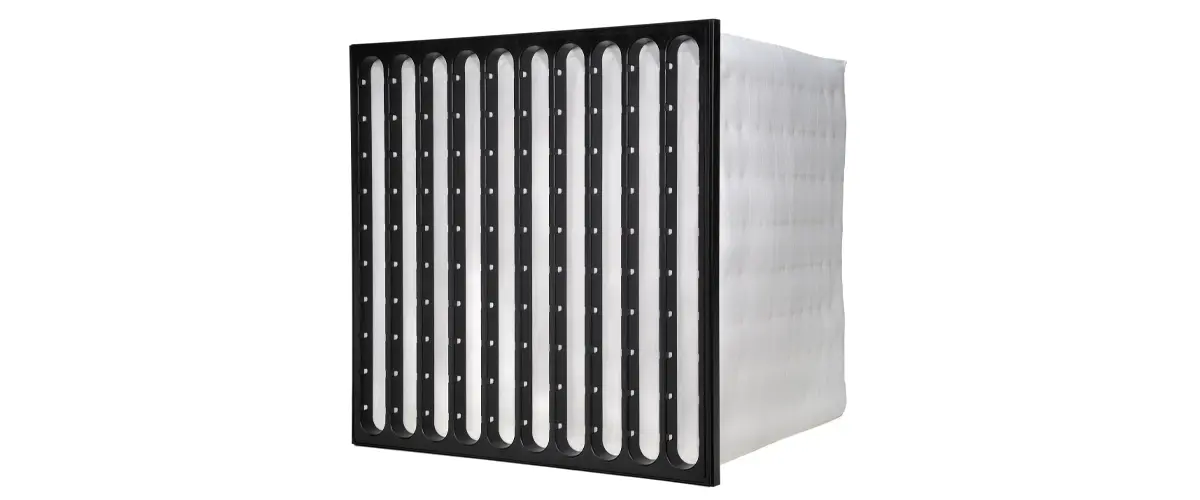
Bag filters (also called pocket filters) are common in commercial HVAC systems. Their extended surface area provides high dust-holding capacity with relatively low pressure drop.
Replacement schedule: 12-18 months, with 1 year being typical.
Bag filters work best as secondary filtration behind a panel or pleated pre-filter. Without adequate pre-filtration, they’ll load faster.
V-Cell Filters
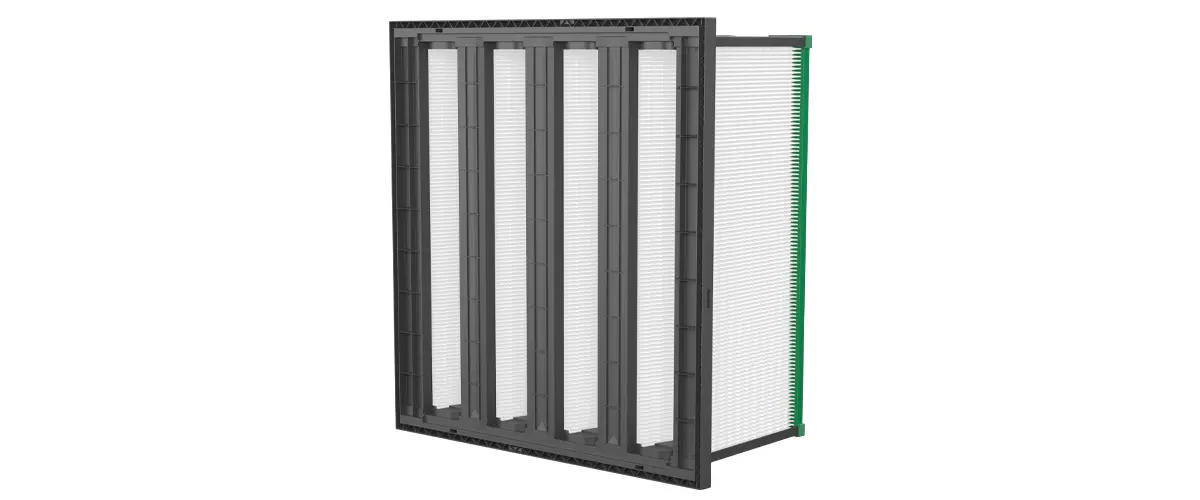
V-Cell filters (also called V-bank or mini-pleat filters) pack a large amount of media into a compact frame. They’re popular in applications requiring high efficiency without excessive fan energy.
Replacement schedule: 24-36 months.
Their longevity makes V-Cell filters cost-effective despite higher upfront prices. The key is monitoring pressure drop. When differential pressure reaches the manufacturer’s recommended limit, it’s time to change.
HEPA and ULPA Filters
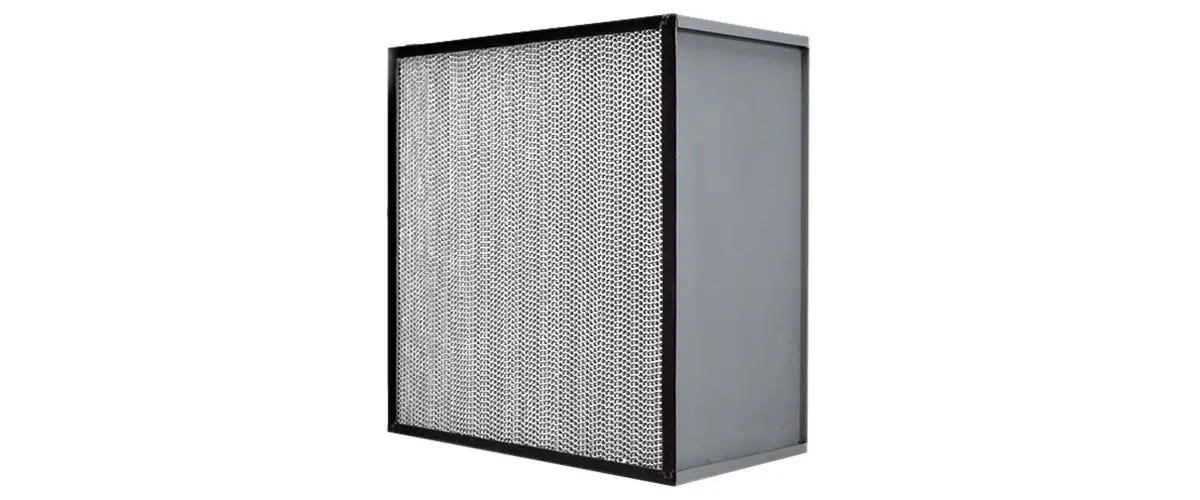
HEPA (High-Efficiency Particulate Air) and ULPA (Ultra-Low Penetration Air) filters represent the highest levels of particulate filtration. HEPA filters capture 99.97% of particles at 0.3 microns. ULPA filters exceed 99.999% efficiency at 0.12 microns. For a detailed comparison, see our guide to HEPA vs. ULPA filters.
Replacement schedule varies significantly by application:
- HVAC applications (hospitals, labs, pharmaceutical facilities): 2-3 years
- Cleanroom ceiling installations: 5-10 years
The dramatic difference comes down to pre-filtration and room classification.
Cleanroom HEPA filters last longer because they’re protected by multiple stages of upstream filtration. By the time air reaches the terminal HEPA filter, most contaminants have already been removed. The HEPA filter handles only the finest particles that slip through.
In standard HVAC applications, HEPA filters often see heavier loading because pre-filtration may be less rigorous.
Room classification matters too. A Class 100 cleanroom (ISO 5) with stringent contamination controls will stress filters less than a Class 100,000 space (ISO 8) with more relaxed protocols.
HEGA and Molecular Filtration
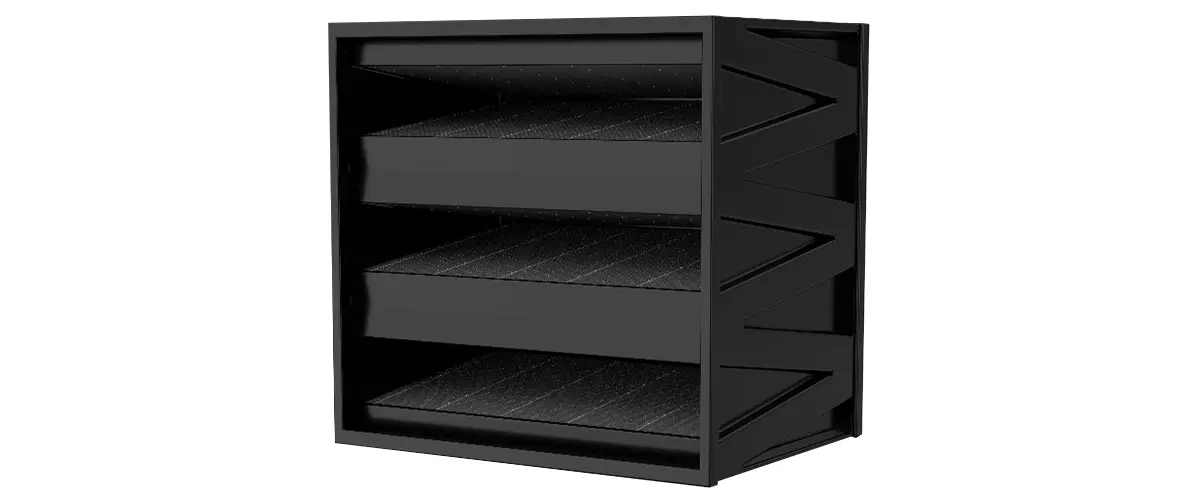
HEGA (High-Efficiency Gas Adsorption) filters and molecular filtration media target gaseous contaminants: chemicals, odors, and volatile organic compounds.
Replacement schedule: 1-3 years depending on application.
The lifespan depends almost entirely on what the filter is adsorbing and at what concentration.
Here’s a real-world example: the HEGA filters we service at certain high-profile installations run on 5-year change cycles. This extended life is possible because of the specific chemical treatment of the cells and the relatively low concentration of target compounds.
Standard HEGA and molecular carbon cells in industrial applications typically fall in the 12-24 month range. Higher chemical concentrations mean faster saturation and shorter filter life.
Panel and Pre-Filters in Commercial Systems
Commercial systems rely on panel filters and pre-filters to protect more expensive downstream filtration.
Replacement schedule: 3-6 months.
Don’t overlook pre-filter maintenance. A saturated pre-filter forces contaminants downstream, shortening the life of bag filters, V-Cells, and HEPA filters. Consistent pre-filter changes are one of the most cost-effective ways to extend the life of your entire filtration system.
The Cost of Waiting Too Long
A dirty filter doesn’t just reduce air quality. It costs money in multiple ways.
- Energy consumption increases. When a filter clogs, the fan works harder to push air through. The Department of Energy estimates that replacing a dirty filter can improve system efficiency by 5-15%.
- Equipment life shortens. Restricted airflow causes fans, motors, and coils to work under strain. Over time, this accelerates wear and leads to premature failures.
- Comfort suffers. A struggling system can’t maintain consistent temperatures. Hot and cold spots develop. Humidity control degrades.
- Air quality declines. A saturated filter stops capturing new particles effectively. In some cases, trapped contaminants can even release back into the airstream.
The cost of a replacement filter is trivial compared to a compressor failure, a contaminated cleanroom, or a production line shutdown.
Creating a Filter Replacement Schedule
The best approach combines manufacturer recommendations, environmental factors, and regular inspections.
For residential systems:
- Start with the filter type’s baseline lifespan
- Adjust based on your specific conditions (pets, allergies, climate, system runtime)
- Check filters monthly during heavy-use seasons
- Set calendar reminders, as filter changes are easy to forget.
For commercial and industrial systems:
- Establish a preventive maintenance schedule based on filter type
- Monitor differential pressure across filter banks
- Document filter changes and actual service life to refine your schedule over time
- Ensure pre-filter maintenance stays consistent to protect downstream filters
When in Doubt, Inspect
No replacement schedule is perfect. Conditions change. Unexpected events, such as a wildfire, a renovation project, or a process change, can alter filter loading dramatically.
The solution is simple: check your filters regularly.
A quick visual inspection takes less than a minute and tells you whether a filter has capacity remaining or needs immediate replacement. For commercial systems, pressure gauges or differential pressure monitors provide objective data.
The goal isn’t to squeeze every last day out of a filter. It’s to change filters at the right time, not so early that you waste money and not so late that you compromise air quality, equipment, or energy efficiency.
Need professional help? Generic filter advice doesn’t account for your facility’s unique conditions. Request a free indoor air quality assessment today and we’ll build a replacement schedule around your actual environment.